What is Female to Male Top Surgery (Chest Masculinization) ?
Female to Male Top Surgery or Chest Masculinization Surgery (mastectomy) remove breast tissue and help transgender man to have their desired body. Furthermore, it is also a clinical treatment process for gender dysphoria.
This procedure required highly skilled plastic surgeon with long time of practice.


What is the main methods of this surgery? .
A mastectomy take from 1 to 5 hours depending on the size of the mammary gland, and the patient's anatomy. Chest masculinization surgery consists of breast reduction surgeries using different incisions:
- Double incisions Mastectomy
- Keyhole Top Surgery (using periareolar incisions).
- Areolar incisions.
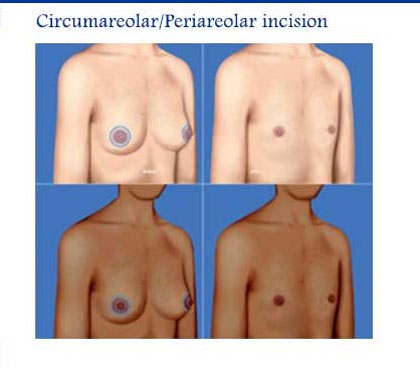
Keyhole surgery.
This procedure is only recommended for people who have small breasts (cup A), firm breast skin. The procedure last from 1,5 to 3 hours. The surgeon makes an incision along the lower half of the areola and removes all the mammary glands through this line.
Advantages.
- The scar line is extremely small, hard to notice and have minimal negative aesthetic effect.
- Preserving nipple sensation is better than other methods.
- Quick surgery and recovery time.
Disadvantages.
- Patients with moderate to large mammary glands and lax, loose skin cannot is not the appropriate candidate.
- Does not solve the problem of large areola.
Areola contour surgery.
This surgery is typically performed on patients with medium-sized breasts (cup A or B) and good skin elasticity. Two circular incision is made along the edge of the areola created a donut areas where the surgeon can access the underlying glandular tissues.
After that, The surgeon removed the excessed tissues. The the incisions is closed using absorbable sutures and pull the skin toward the center. In case of having too much excessive skin additional incisions will be made to remove those excessive skin. This surgery can take between 3 to 5 hours to complete.
Advantages.
- Nipple sensation is preserved.
- Addresses excess skin around the areola.
- It seems that the scar is only around the edge of the areola, so the cosmetic effect is relatively good.
Disadvantages.
- It can not perform on patients who have large and saggy breasts.
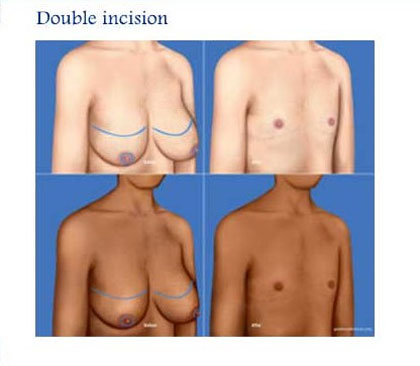
Double incision Mastectomy.
This surgery is often combined with nipple-areola complex grafting and is applied to patients with large mammary glands (C cup or higher), nipple-areola position lower than the inframammary fold and severe sagging. The surgeon usually performs the removal of skin, fat and mammary glands in about 3 to 4 hours.
The patient's nipple-areola complex will be cut and shaped like a male nipple-areola and reimplanted in a new position.
Advantages.
- The skin and mammary glands are removed more thoroughly than the above methods, so it is applied to patients with large breasts and sagging skin.
- Combined with nipple shaping should bring quite good physical effect.
Disadvantages.
- Long visible scars.
- Areola sensation loss.
Risk of Chest Masculinization procedure?.
Like the other surgery, mastectomy carries the risk of bleeding, infection, and adverse reaction to anesthesia. Other possible complications include.
- Bad scar
- Hematoma
- Seroma
- Wounds do not heal
- Dissatisfied with the result
- The two sides are not balanced (breast asymmetry)
- Necrosis, especially nipple necrosis
Preoperative guide for patient.
- Transgender mastectomy is performed for people over the age of 18.
- Hormone therapy is not recommended prior to this surgery.
- In some cases, waiting for the pectoral growth after treatment with additional testosterone will provide the best result of surgery. If you are on testosterone therapy, patients will have a blood test to make sure your testosterone levels are within normal limits.
- Prior to the surgery, the surgeon will provide detailed consultations on surgery options and aesthetic outcome as well as any substance/ medical devices involved with each option.
- Patients need to follow the surgeon's instructions before the surgery including diets, stop smoking and medications usage.
What should patients do?.
- Discussions about the desired and expectation with the surgeon.
- Ask for scars treatment tips.
- Prepare family's medical profiles.
- Perform frequent checking on the breast prior and post operative..
- Make sure to get screened for breast cancer before surgery.
Postoperative recovery process.
Recovery time after a mastectomy varies for each individual. Most people are able to return to work or school approximately two weeks after the procedure.
To prevent fluid buildup after surgery, the doctor will insert a small tube into each side of the chest to drain excess fluid. These tubes are typically removed once the doctor determines that the condition is stable.
Days 1 and 2 of recovery are often the most uncomfortable. This discomfort can be the result of the anesthesia wearing off as well as the compression garment or surgical bra holding the bandage over the incisions or skin grafts.
To ensure there is no additional pressure on the surgical site, the patient will need to lie on his or her back for at least the first week after surgery.
Approximately 10 days after surgery, the patient will have an appointment to remove post-operative stitches.
Usually the swelling will go down within 2 or 3 weeks, but for some people this may take up to 3-4 months.
The skin of the nipple may appear dark in the early stages after surgery, but this typically fades as new skin develops. However, if redness, swelling, ulcers, or pus occur, the patient should see their doctor immediately for prompt treatment.
Patients should be careful not to lift their arms above their head for at least 2 to 3 weeks after surgery. Movements such as reaching and lifting can increase scarring. After 6 to 8 weeks, patients can usually do exercise, lifting, and running.
Post-operative care.
- Do not shower, the patients are not allowed to take a shower until prompt treatment, or the compression garment will be taken off. Using soft washcloths and taking sponge baths are typically the best and easiest ways to stay clean during recovery.
- Applied ice frequently during the first two days after surgery. Most patients experience swelling and bruising, but the amount varies greatly. Ice can help reduce inflammation and ease pain.
- Do not lift heavy object (> 5kg) or exercise strenuously. Patients will continue with light exercise such as walking as soon as they feel well. Only notice that don't do anything, just be careful not to do anything that increases the heart rate.
- Look after yourself. The best things you can do to speed up the healing process, it's important to rest, eat nutritious meals, and limit smoking and alcohol consumption.
- Use scar treatments. Mastectomy scars may initially appear red, which is a normal part of the healing process.
- Over-the-counter scar treatments can help accelerate healing and reduce both scarring and redness. Patients can use silicone sheets to apply continuous pressure to the wound, preventing keloid scars, typically for about 3 months. If keloid scarring has already developed, patients can return to their doctor for scar dissolving treatment.
* The result also depends on individual's physiology.